
 CONFERENCE
Latvijas Zinātnes padomes Latvijas – Ukrainas sadarbības programma Zinātnē un tehnoloģijās
Projekts: Radioaktīvā piesārņojuma ietekmes novērtējums uz asaru un raudas genomiem, izmantojot jutīgus ģenētiskos marķierus
Partneri: Latvijas Universitātes MDZF Bioloģijas institūts (projekta vadītājs MDZF vadošais pētnieks Dr.hab.biol. Dalius Butkauskas) un Ukrainas Nacionālās Zinātņu Akadēmijas Hidrobioloģijas institūts (projekta vadītājs Prof., D.Sc. Corresponding Member of the NAS of Ukraine, Head of Department of Aquatic Radioecology Institute of Hydrobiology of the NAS of Ukraine Dmitri Gudkov)
Pētījuma galvenais mērķis ir izstrādāt informatīvu un salīdzinoši lētu DNS analīzes metodi radiācijas ietekmes noteikšanai, izmantojot zivju modelētājsistēmu, izmantojot projekta realizētāju iepriekš validētas ekosistēmu kvalitātes novērtēšanas un genoma pētniecības metodes (mitohondriju D-loop reģions un ATP-6 gēns, iPBS retrotranspozonu marķieri). Pētījums balstās uz divu zivju sugu – asara un raudas – populāciju indivīdu genoma pētījumiem un savstarpēju salīdzināšanu Latvijā un Ukrainas Černobiļas reģionā. Izstrādātā metode kalpos par pamatu turpmākiem pētījumiem par vides pārmaiņu izraisītām gēnu funkcionalitātes izmaiņām, novērtējot izmaiņas gēnu metilācijā un mobilo ģenētisko elementu pārvietošanos genomā.
Latvijas – Ukrainas projektam “RADIOAKTĪVĀS KONTAMINĀCIJAS IETEKMES NOVĒRTĒŠANA UZ ASARU UN RAUDU GENOMIEM, PAMATOJOTIES UZ JUTĪGIEM ĢENĒTISKAJIEM MARĶIERIEM” veltītā semināra īss apraksts
Seminārs notika 2025. gada 3. novembrī, 9:30 līdz 14.00, Jelgavas ielā 1, 701. auditorijā (Latvijas Universitāte, Rīga). Uz atvērto projekta semināru tika aicināti arī kolēģi, ar kuriem projekta grupai ir cieša sadarbība projekta tematikā Baltijas valstīs. Līdz ar to seminārā piedalījās arī Lietuvas Dabas pētījumu centra vadošais pētnieks Adomas Ragauskas, LU BI Hidrobioloģijas laboratorijas vadošā pētniece Agnija Skuja un pētnieks Dāvis Ozoliņš, kā arī LU MFML Ģenētikas profesors Īzaks Rašals un tematikā ieinteresētie LU studenti.
Projekta partnera no Ukrainas – Ukrainas Nacionālās Zinātņu akadēmijas (NAS) Hidrobioloģijas institūta Akvātiskās radioekoloģijas nodaļas vadītājs, prof., Dr. hab., NAS Ukrainas korespondētājloceklis Dmitrijs Gudkovs pievienojās semināram tiešsaistē un prezentēja materiālus par pētījumu zonu Ukrainā, ieskaitot reģionu, kas ir spēcīgi ietekmēts ar radionuklīdiem un no kura tika ievākts materiāls molekulārajiem pētījumiem.
Ukrainā savāktos paraugus uz Latvijas Universitāti nogādāja projekta dalībniece no Ukrainas puses, doktorante Irina Maruščaka. Viņa piedalījās seminārā savas zinātniskās vizītes laikā LU un prezentēja pētījumu rezultātus, tostarp par dažādām augu sugām, kas ievāktas Černobiļas zonā un kurām, veicot mikroskopiskus novērojumus, tika fiksēta genotoksiska iedarbība.
Dr. biol. Dalius Butkauskas moderēja semināru un prezentēja materiālus, kas saistīti ar asaru un raudu paraugu visaptverošiem ģenētiskiem pētījumiem, kas savākti dažādās ūdenstilpēs Lietuvā un Latvijā. Metodes, kas tika izstrādātas šajos pētījumos, tostarp mtDNA D-cilpas un ATP-6 fragmentu amplifikācija un sekvenēšana, kā arī turpmākā molekulārā analīze, tiks piemērotas, īstenojot šo Latvijas un Ukrainas zinātnieku kopīgo pētījumu.
Iespēja salīdzināt zivju populāciju ģenētisko profilu, kuras apdzīvo antropogēni ietekmētas zonas, īpašu uzmanību pievēršot zivju populācijām, kas apdzīvo termiski un ķīmiski stipri transformētas ūdenstilpes kodolspēkstaciju darbības dēļ, un it īpaši zonas, ko ietekmējusi radiācijas ietekme industriālas katastrofas rezultātā, palīdzēs atklāt izmaiņas un iespējamo adaptācijas potenciālu asariem un raudām kā divām pētījumu zonā plaši izplatītām modeļa zivju sugām.
Semināra laikā tika sniegta informācija par izvēlēto zivju un augu sugu, kuras apdzīvo saldūdens baseinus Austrumbaltijas reģionā (Lietuva un Latvija) un Ukrainā. ekoloģiskajiem un molekulārajiem pētījumiem Projekta galvenais mērķis ir izveidot molekulāro datubāzi kā pamatu, kas palīdzēs regulāri veikt Černobiļas katastrofas radionukleoīdu stipri piesārņotajā zonā izdzīvojušo zivju populāciju stāvokļa novērtējumu, aptverot un apstrādājot būtisko ekoloģisko un molekulāro datu kopumu, kas raksturo gan skartos, gan relatīvi neskartos reģionus.
Latvian Council of Science Latvian-Ukrainian Programme of Scientific and Technological Cooperation
Project: Assessment of the impact of radio-contamination on perch and roach genomes based on sensitive genetic markers
Partners: University of Latvia (Leading researcher Dr. hab. biol. Dalius Butkauskas) and Institute of Hydrobiology of the National Academy of Sciences of Ukraine (Prof., D.Sc. Corresponding Member of the NAS of Ukraine, Head of Department of Aquatic Radioecology Institute of Hydrobiology of the NAS of Ukraine Dmitri Gudkov)
The project aims to utilize the project applicant's previously validated ecosystem quality assessment and genome research methods (mitochondrial D-loop region and ATP-6 gene, iPBS retrotransposon based markers). The study will be based on genome research and mutual comparison of individuals from populations of two fish species - perch and roach - in Latvia and the Chernobyl region of Ukraine. The main goal of the study is to develop an informative and relatively inexpensive method for determining the impact of radiation on a fish model system. The developed method will serve as a foundation for further studies of changes in gene functionality caused by environmental changes, assessing changes in gene methylation and movement of mobile genetic elements within the genome.
Short description of the seminar dedicated to implementation of the joint Latvian - Ukrainian project “ASSESSMENT OF THE IMPACT OF RADIO-CONTAMINATION ON PERCH AND ROACH GENOMES BASED ON SENSITIVE GENETIC MARKERS”
The seminar was carried out on 3.11.2025, at 9:30 AM, Jelgavas iela 1, auditorium 701 (University of Latvia, Riga). Colleagues with whom the project group has close collaboration on the project's theme in the Baltic States were also invited to the open project seminar. Consequently, the seminar was also attended by Adomas Ragauskas, a leading researcher from the Nature Research Centre (Lithuania); Agnija Skuja, a
leading researcher from the UL IB Hydrobiology Laboratory, and researcher Dāvis Ozoliņš; and Īzaks Rašals, UL FMLS Professor of Genetics and UL students, those interested in the project's theme. The leader of the project partner from Ukraine Prof., D.Sc. Corresponding Member of the NAS of Ukraine, Head of Department of Aquatic Radioecology Institute of Hydrobiology of the NAS of Ukraine Dmitri Gudkov join the seminar online and presented material about study area in Ukraine including heavy contaminated by radio-nuclides zone from which material for molecular studies was collected. Samples, collected in Ukraina were transferred to University of Latvia by the perticipant of the project from Ukrainian side PhD student Irina Marushchak. She participated in the seminar during her short scientific visit tu LU and presented results of investigation including different plant species, collected in Chernobyl zone with fixed genotoxic effects captured by microscopic observations. Dr. biol. Dalius Butkauskas moderated seminar and presented material related with comprehensive genetic studies of perch and roach specimens collected in different water bodies located in Lithiuania and Latvia. Methods that were established during these studies includingamplification and sequencing of D-loop and ATP-6 fragments of mtDNA and following molecular analysis will be applied implementing current joint study of Latvian and Ukrainian scholars. The possibility to compare genetic profile of fish populations inhabiting anhropogenically affected zones focusing on fish populations inhabiting water bodies heavily transformed by thermal and chemical polution in relation with nuclear pover plant operation and especially zones affected by radio contamination as a consequence of industrial disaster will help to reveal changes and possible adaptation potential of perch and roach as two model fish species abundant in the study area. During the seminar information about ecological and molecular studies of chosen fish and some plant species inhabiting freshwater bodies in the Eastern Baltic region (Lithuania and Latvia) and Ukraine was presented. The main purpose of the project is the establishment of molecular database as a background that will help to carry on the assessment of the status of fish populations survived in heavily contaminated by radionuclides zone of Chernobil disaster on regular way encompassing and processing essential ecological and molecular data representing affected and relatively unaffected regions to help find out most optimal decissions for resilience of affected regions.
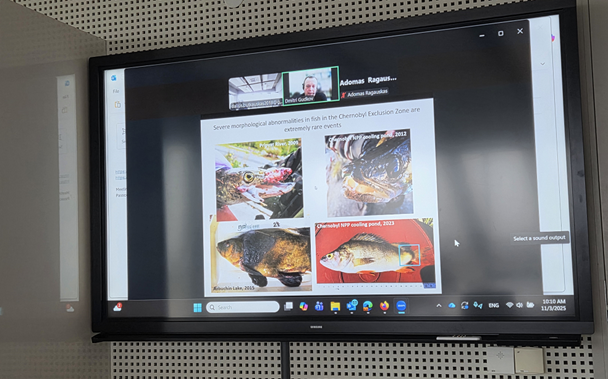
1.attēls. Prof., A fragment of the presentation by Prof., D.Sc., Corresponding Member of the National Academy of Sciences (NAS) of Ukraine, and Head of the Department of Aquatic Radioecology at the NAS of Ukraine's Institute of Hydrobiology, Dmitry Gudkov, given at the open seminar of the joint Latvian-Ukrainian project.
Figure 1. Presentation fragment of Prof., D.Sc. Corresponding Member of the NAS of Ukraine, Head of Department of Aquatic Radioecology Institute of Hydrobiology of the NAS of Ukraine Dmitri Gudkov.
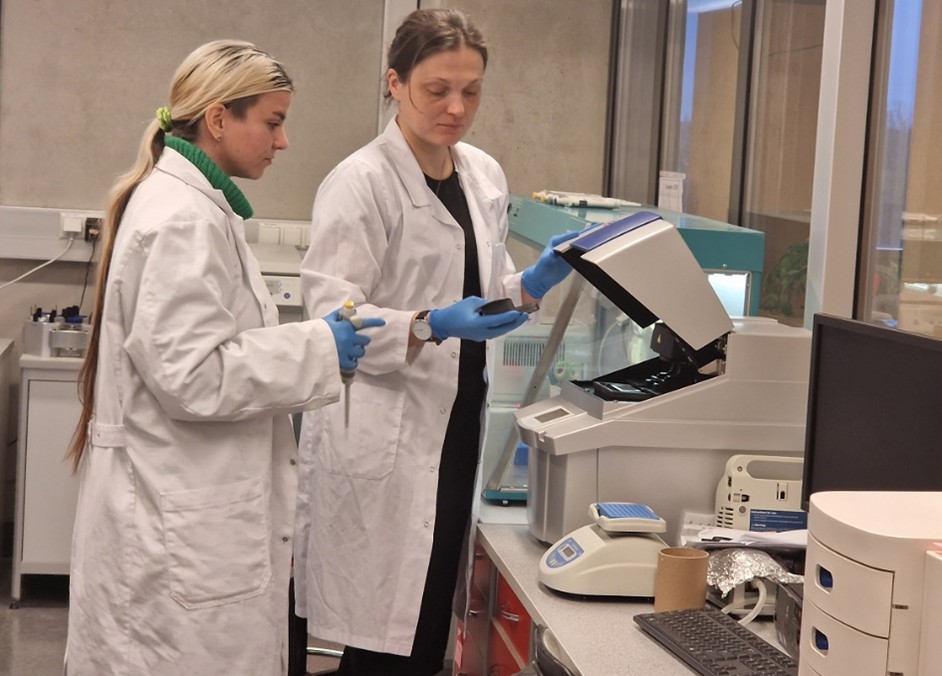
2. attēls. Zivju DNS analīze Vides ģenētikas laboratorijā, projekta izpildītājas pētniece Elīna Ažēna un maģistratūras studente Evelīna Slavnova.
Figure 2. Fish DNA analysis at the Environmental Genetics Laboratory, performed by project implementers researcher Elīna Ažēna and master student Evelīna Slavnova.