
Head of Department
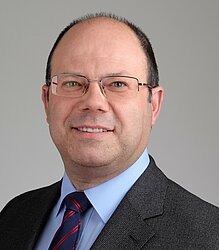
Asoc. prof. Ainārs Bajinskis
Department of Public Health and Health Care, established in 2025, integrates expertise in human and animal physiology, radiography, nursing science, health management, and public health. Its vision is to become a center of interdisciplinary education and research in health sciences, making a significant contribution to improving population health and promoting evidence-based health care practices in Latvia. Strategic, Long-Term Research Goals and Implementation:
The unification of various specialties within a single department will enhance integration and synergy:
• Promotion of high-impact interdisciplinary research: Creating synergy among the combined fields to tackle complex health challenges (e.g., linking physiological markers with population health indicators, improving patient pathways through integrated nursing and radiography studies, assessing health system reforms using management and epidemiological data).
• Strengthening the link between research and education: Ensuring that research findings are integrated into the content of study programs (Medicine, Nursing, Radiography, Dentistry, Sports Science, Nutrition, Biology, Epidemiology, and Medical Statistics) and involving students in research activities.
• Knowledge transfer and societal impact: Transforming research outcomes into tangible improvements in public health policy, health care practices, and patient outcomes in Latvia.
• International cooperation and visibility: Building partnerships with international research institutions and participating in global research networks and projects.
Key Research Outcomes and the Role of Multidisciplinarity:
The department’s characteristic multidisciplinarity is its main strength and a driving force for potential impact.
The Role of Fundamental and Applied Research:
The department conducts a range of research from fundamental to applied:
• Fundamental Research: Primarily focused in the Human and Animal Physiology component, emphasizing the understanding of essential life processes and providing a vital knowledge base.
• Applied Research: The dominant form in Public Health, Health Management, Nursing, and Radiography. This research is directly aimed at solving practical problems, improving health outcomes, enhancing health care delivery, informing policy, developing clinical tools, and evaluating interventions.
• Translational Research: The department is well-positioned for translational research, bridging the gap between fundamental physiological discoveries and their practical applications in clinical settings (Nursing, Radiography, Medicine, Dentistry) or at the population level (Public Health).
• Methodological Research: Epidemiology and medical statistics contribute by developing and applying advanced research methodologies essential to both fundamental and applied research across all fields.
The department employs a substantial team—approximately 20 core staff members (professors, associate professors, assistant professors, lecturers, researchers, assistants, lab technicians) and more than 50 hourly lecturers. This diverse personnel ensures the educational process in the main study programs (Medicine, Nursing, Radiography, Dentistry, Sports Science, Nutrition, Biology, Epidemiology, and Medical Statistics) and actively participates in research. Funding is provided through the university budget, national research grants, and international projects.
The main research directions reflect the broad range of fields that make up the department, focusing on public health challenges, optimization of the health care system, development of clinical practice (Nursing, Radiography), and investigation of physiologically important mechanisms related to health. Main Research Areas and Focuses:
The department's research activity is inherently multidisciplinary, stemming from its unique combination of fields. The main research focuses include:
• Human Physiology: Research on fundamental physiological processes (e.g., cardiovascular, metabolic, respiratory) under rest, physical, and cognitive stress conditions to understand adaptive mechanisms and identify limiting functional parameters. Includes studies at both cellular and system levels.
• Public Health: Development and evaluation of health promotion and disease prevention programs, analysis of social determinants of health, health inequalities, environmental health, and health policy issues relevant to Latvia and the Baltic region. Research also includes the role of physical activity and nutrition in promoting public health across different age groups.
• Radiography and Medical Imaging: Optimization of diagnostic and therapeutic imaging methods, radiation protection and safety protocols, quality assurance in imaging, image analysis (potentially including AI applications), and the role of imaging in the pathogenesis of specific diseases.
• Nursing Science: Focus on evidence-based nursing practice, patient safety and care quality, chronic disease management, palliative care, mental health in nursing, research in nursing education, and the development of advanced nursing practice roles.