
 CONFERENCE
Head of the center
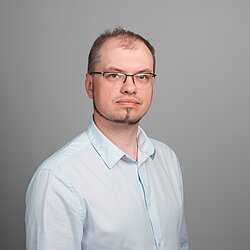
Associate Professor Artis Kinens
The staff of the Center for Sustainable Chemistry provides teaching of study courses in organic and sustainable chemistry, as well as in other related study programs. The Center's research team conducts high-level scientific research, with a central focus on the development of novel, environmentally friendly organic synthesis methods and their application in the synthesis of biologically active natural products and their analogues. Research is carried out in collaboration with other departments of the Faculty of Medicine and Life Sciences, the Faculty of Science and Technology, the Latvian Institute of Organic Synthesis, and foreign research institutions. Additionally, the Center's staff conducts research and quality assessments for industry needs.
The main research directions of the Center for Sustainable Chemistry are:
1. Organic synthesis of natural products and their synthetic analogues, based on environmentally friendly methods using organic electrochemical synthesis and nucleophilic catalysis.
2. Design and synthesis of task-specific ionic liquids, focusing on the development of biodegradable and minimally toxic ionic liquids, as well as their application as sustainable solvents in chemical reactions.
3. Design of chiral nucleophilic catalysts and their application in stereoselective synthesis.
4. Development of novel synthetic and crystal engineering methodologies for the design of solid-state luminophores and studies of their potential applications.
5. Theoretical studies of adsorption and redox processes in the electrical double layers, such as CO2 electrosorption and metal deposition.
| First name, Last name | Position ENG |
|---|---|
| Dr. Chem. Artis Kinēns | Associate Professor, Head of the Cener |
| Dr. Chem. Edgars Sūna | Professor |
| Dr. Chem. Kristaps Jaudzems | Professor |
| PhD Vladislav Ivanistsev | Associate Professor |
| Dr. Chem. Anda Prikšāne | Assistant Professor |
| Dr. Chem. Jāzeps Logins | Assistant Professor |
| PhD Eduards Baķis | Senior Researcher |
| PhD Oļesja Koleda | Reader |
| PhD Viktorija Vitkovska | Reader |
| Rihards Klūga | Researcher, Laboratory Manager |
| Artūrs Mazarevičs | Lecturer, PhD Student |
| Oto Filipsons | Lecturer, PhD Student |
| Matīss Bojārs | PhD Student |
| Andrejs Savkins | PhD Student |
| Anna Stepanova | PhD Student |
| Beatrise Silava | Laboratory Assistant |
| Alika Aņisimova | Laboratory Assistant |
| Artūrs Jubass | Laboratory Assistant |
Organic synthesis of natural products and their synthetic analogues
- Koleda O., Sadauskis J., Antonenko D., Treijs E. J., Steberis R. D., Suna E. “Entry to 2-aminoprolines via electrochemical decarboxylative amidation of N‑acetylamino malonic acid monoesters” Beilstein J. Org. Chem. 2025, 21, 630–638. https://doi.org/10.3762/bxiv.2024.71.v1
- Koleda, O.; Prane, K.; Suna, E. “Electrochemical Synthesis of Unnatural Amino Acids via Anodic Decarboxylation of N-Acetylamino Malonic Acid Derivatives” Org. Lett. 2023, 25, 7958-7962. https://doi.org/10.1021/acs.orglett.3c02687
- Le Marchand, T., [..], Jaudzems, K., [..] “1H-Detected Biomolecular NMR under Fast Magic-Angle Spinning” Chem. Rev. 2022, 122: 9943-10018. https://doi.org/10.1021/acs.chemrev.1c00918
Design and synthesis of task-specific ionic liquids
- Goloviznina, K.; Bakis, E., [..] “Attraction between Like Charged Ions in Ionic Liquids: Unveiling the Enigma of Tetracyanoborate Anions” J. Phys. Chem. Lett. 2024, 15, 1, 248-253. https://doi.org/10.1021/acs.jpclett.3c02983
- Bakis, E., [..] “Unravelling free volume in branched-cation ionic liquids based on silicon” Chem. Sci., 2022, 13, 9062-9073. https://doi.org/10.1039/D2SC01696F
Design of chiral nucleophilic catalysts
- Kluga R., Kinens A., Suna E. “Chiral 4-MeO-Pyridine (MOPY) Catalyst for Enantioselective Cyclopropanation: Attenuation of Lewis Basicity Leads to Improved Catalytic Efficiency” Chem. Eur. J. 2024, e202301136. https://doi.org/10.1002/chem.202301136
- Kinens, A.; Balkaitis, S.; Ahmad, O. K.; Piotrowski, D. W.; Suna, E. “Acylative Dynamic Kinetic Resolution of Secondary Alcohols: Tandem Catalysis by HyperBTM and Bäckvall’s Ruthenium Complex” J. Org. Chem. 2021, 86, 7189–7202. https://doi.org/10.1021/acs.joc.1c00545
Development of novel synthetic and crystal engineering methodologies
- Zabolotnii, V.; Tamuliene, J.; Drava, M. M.; Kirova, T.; Tepliakova, I.; Lukinsone, V.; Kinens, A.; Viter, R. “Investigation of Structure, Optical Properties and Chemical Stability of the KL1421 Pyridinium Luminophore with High Quantum Yield” Appl. Mater. Today 2025, 46, 102890. https://doi.org/10.1016/j.apmt.2025.102890
- Mazarevics, A.; Kinens, A.; Leduskrasts, K.; Suna, E. “Tailoring Emission Lifetime for Dopant-Induced Phosphorescence” ACS Materials Lett. 2024, 6, 4590–4595. https://doi.org/10.1021/acsmaterialslett.4c01412
- Mazarevics, A.; Leduskrasts, K.; Suna, E. “Impurity-Induced Phosphorescence in Purely Organic Materials” ACS Materials Lett. 2024, 6, 2703–2713. https://doi.org/10.1021/acsmaterialslett.4c00447
Theoretical studies of adsorption and redox processes in the electrical double layers
- I. Vetik, N. Žoglo, A. Kosimov, R. Cepitis, V. Krasnenko, H. Qing, P. Chandra, K. Mirica, R. Rizo, E. Herrero, J. Solla-Gullón, T. Trisukhon, J.W. Gittins, A.C. Forse, V. Grozovski, N. Kongi, V. Ivanistsev, Demonstrating “Electrochemical CO2 Capture on Redox-Active Metal-Organic Frameworks” 2026. https://doi.org/10.48550/arXiv.2411.16444
- V. Ivanistsev, R. Cepitis, J. Rossmeisl, N. Kongi “Twenty years after: scaling relations in oxygen electrocatalysis and beyond” Chem. Soc. Rev. 2025, 54, 10956–10976. https://doi.org/10.1039/D5CS00597C
- R. Cepitis, N. Kongi, J. Rossmeisl, V. Ivaništšev “Surface Curvature Effect on Dual-Atom Site Oxygen Electrocatalysis” ACS Energy Lett. 2023, 8, 1330–1335. https://doi.org/10.1021/acsenergylett.3c00068
- H. Ers, I.V. Voroshylova, P. Pikma, V.B. Ivaništšev “Double layer in ionic liquids: Temperature effect and bilayer model” J. Mol. Liq. 2022, 363, 119747. https://doi.org/10.1016/j.molliq.2022.119747
- A. Bagger, O. Christensen, V. Ivaništšev, J. Rossmeisl “Catalytic CO2/CO Reduction: Gas, Aqueous, and Aprotic Phases” ACS Catal. 2022, 12, 2561–2568. https://doi.org/10.1021/acscatal.1c05358