
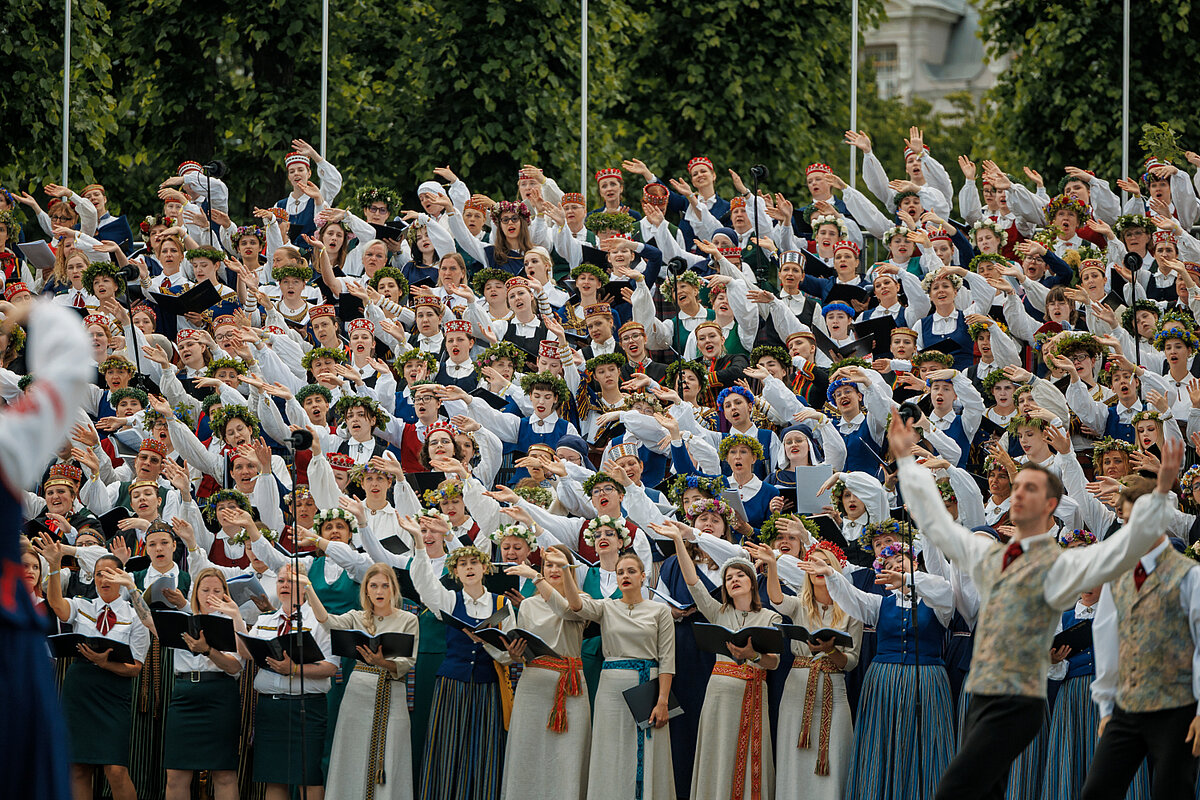
To find out how participants themselves experienced the festival, a survey was sent out afterward covering the quality of the artistic program, the venues, the organization, and personal memories. By 21 July, 233 responses had been received: 145 from Latvia, 54 from Lithuania, 33 from Estonia, and one from Germany. Below are the main findings — in both numbers and participants' own words.
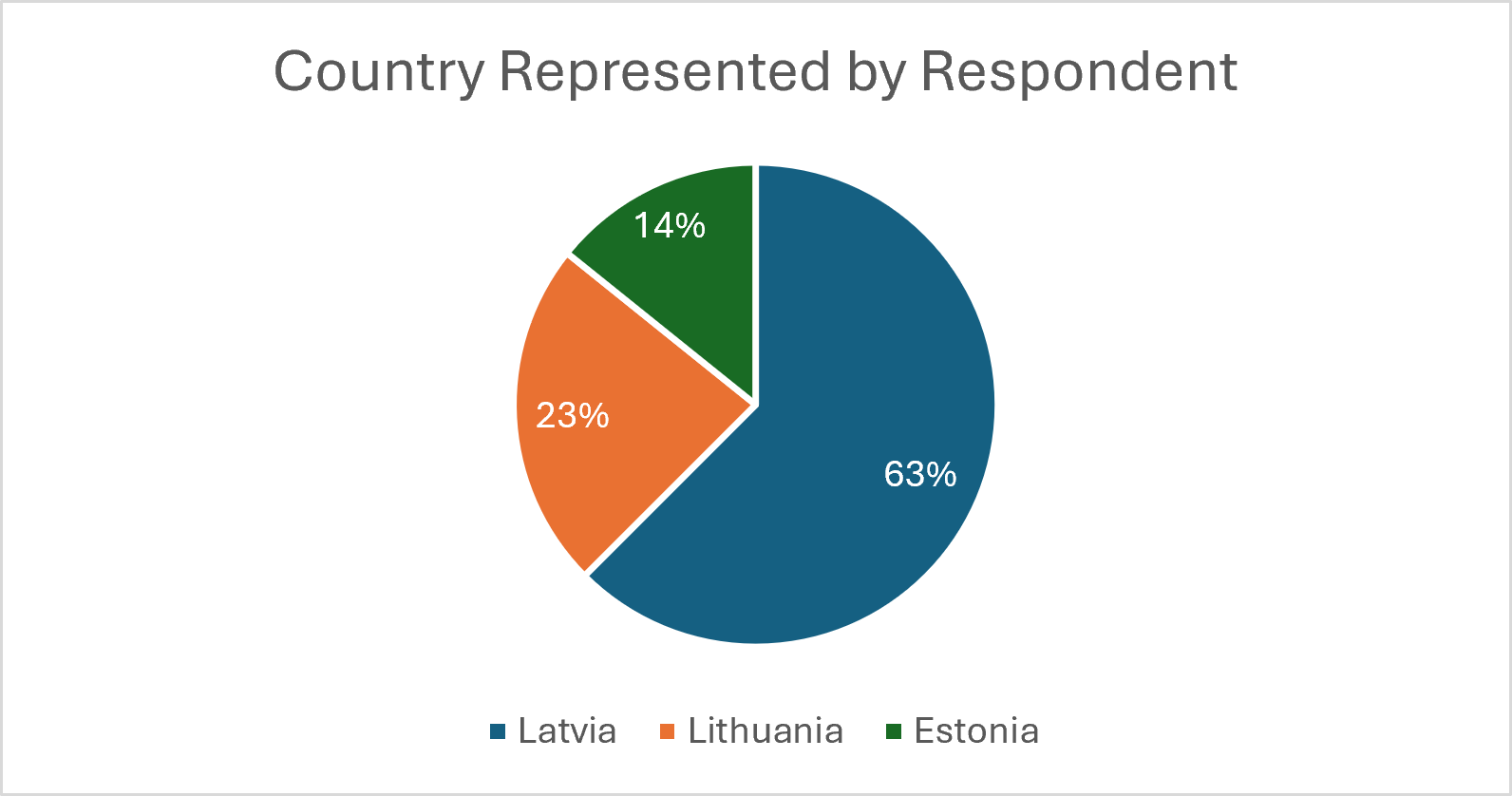
Figure 1. Distribution of survey participants by country (n = 233)
Who took part in the survey?
The most represented age group is 19–24 years old (81 respondents, or 35%), while the second most represented age group among respondents is 25–34 years old (54). The smallest number of respondents falls into the under-18 age group (16), the 55–64 age group (11), and the 65+ age category (8).
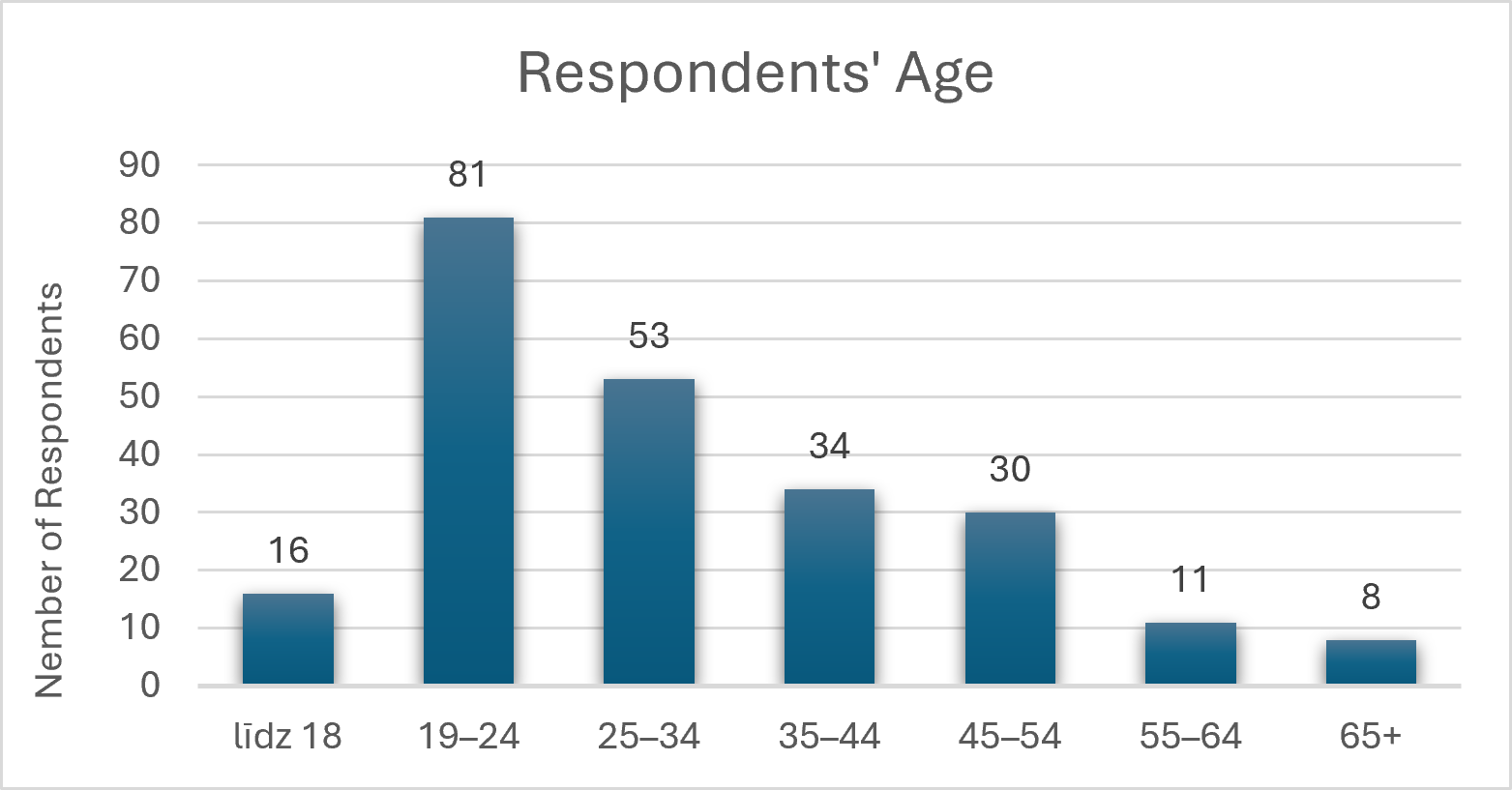
Figure 2. Age distribution of participants (n = 233)
More than half of the respondents (132 out of 233, or 57%) took part in the festival for the first time, while 101 respondents (43%) had participated before. The majority of respondents are choir singers (105, or 45%) and folk dance ensemble dancers (99, or 42%), along with wind orchestra musicians, ensemble leaders, conductors, and organizers.
Artistic program and repertoire
The festival's artistic program received high ratings. The overall artistic quality of the festival was rated at an average of 4.5 (on a scale of 1–5). The artistic quality of the concerts was rated at 4.6; the choice of repertoire at 4.4; and the diversity of the concert program at 4.5. Even more compelling are the overall satisfaction indicators — an average rating of 4.7 for willingness to recommend "Gaudeamus" to others, 4.7 for the wish to take part in the festival again, and 4.3 for the statement that the festival strengthened unity among Baltic students.
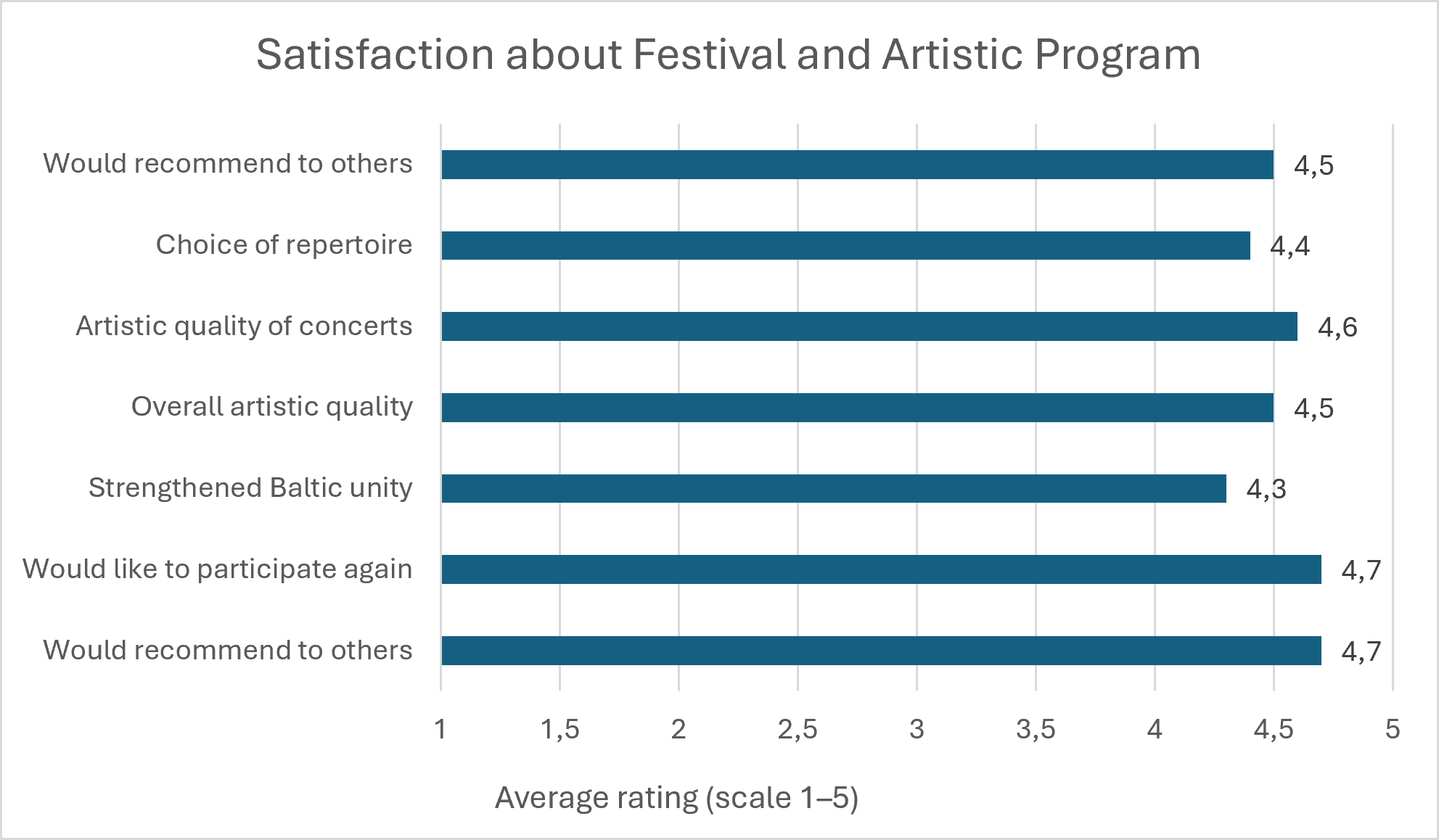
Figure 3. Satisfaction about Festival and Artistic Program (scale 1–5, n = 233)
Participants' Assessment of the Festival's Organizational Work
Catering received the highest ratings, both among Latvian participants (4.2) and among Lithuanian and Estonian participants (4.5). The response to an unexpected situation was also highly rated: when the closing concert had to be temporarily interrupted due to a severe thunderstorm, the timely decision to do so was seen as professional, and the spontaneous group singing that followed in the LU Great Hall became, for many participants, one of the most memorable moments of the festival.
The data also reveal some differences in ratings. Lithuanian and Estonian participants rated the accessibility of concert venues lower than Latvian participants did (3.5 vs. 4.2), as well as the changing rooms and storage of belongings (3.5 vs. 4.1), the availability of information before the festival (3.5 vs. 4), and communication with organizers (3.8 vs. 4.3). This difference suggests that at future festivals, additional attention should be paid to providing timely information and practical on-site support specifically for participants from abroad.
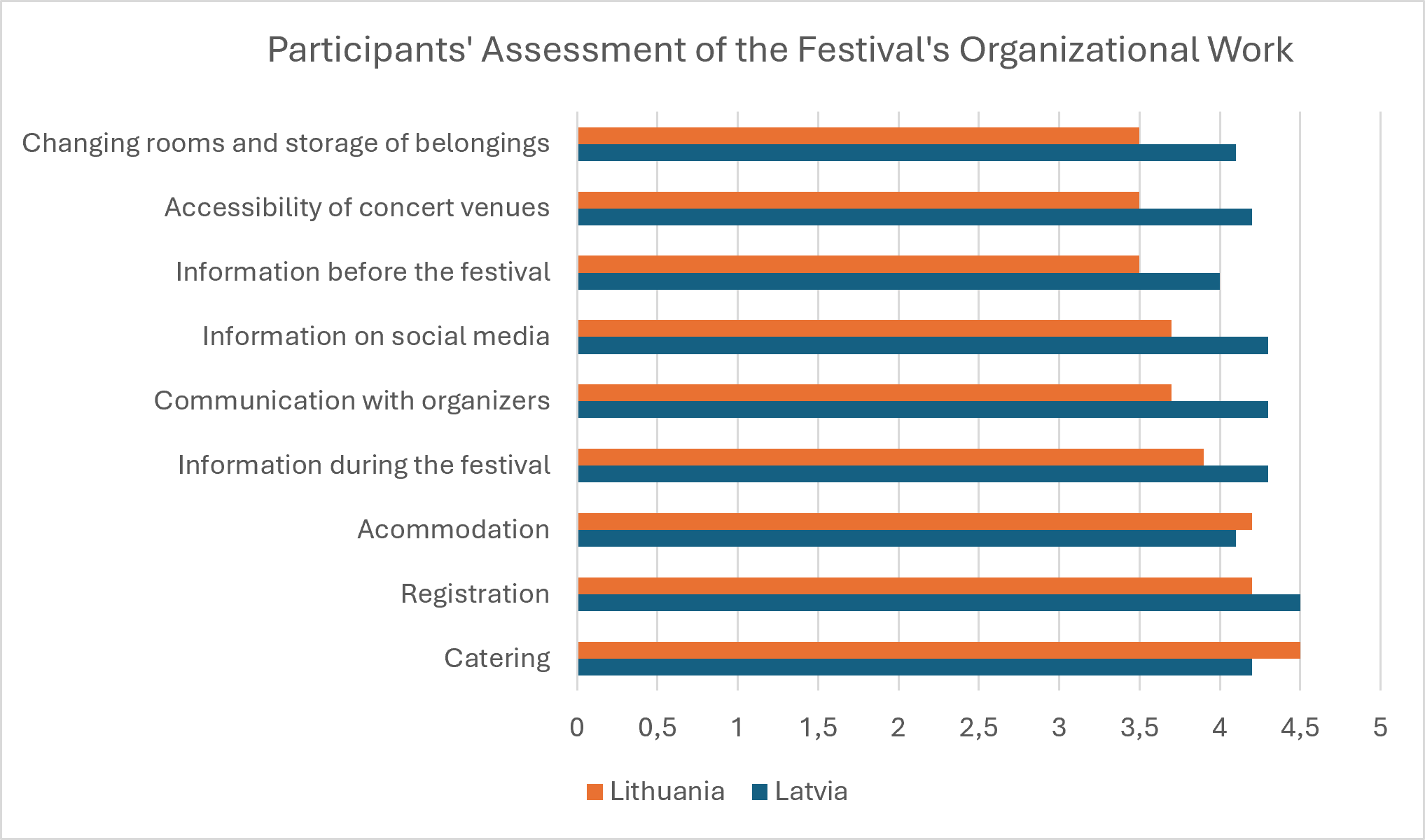
Figure 4. Organizational assessment of the festival, comparing responses from Latvian and Lithuanian/Estonian participants (scale 1–5)
Highlights from Participants' Memories
In their survey responses, participants also shared personal memories:
When the closing concert was briefly interrupted by a thunderstorm, choir singers took shelter in the halls of the University of Latvia, where they spontaneously joined together in song — several participants named this moment as one of the most touching of the festival.
During the piece "Maķenīt palaidos," one dancer, while being tossed into the air, saw the Freedom Monument upside down right in front of them — a feeling they described as "surreal."
After the participants' ball, students from all three countries were in no hurry to part ways, staying on to teach one another the movements from their dance repertoires.
Several participants recalled how Chinese tourists, upon seeing young people in folk costumes, tried to say "very beautiful" in Latvian.
A German lady, hearing songs from the Latvian repertoire in a café, was so moved that she asked for the sheet music — participants later sent it to her by email.
Recommendations for Future Festivals
Venue: Participants encourage evaluating a more spacious venue for the closing concert, for the comfort of both performers and spectators.
Transport: Provide free public transport for all festival participants.
Communication: Share information about rehearsal schedules earlier, especially for participants from abroad.
Socializing: Plan more shared, informal activities in addition to the participants' ball.
Summary
Despite the hot sun during rehearsals and the severe thunderstorm that created some organizational challenges, the survey results show that most participants of the 20th Baltic Student Song and Dance Festival "Gaudeamus" went home with a strong sense of belonging and a desire to take part in future festivals. Both the wish to participate again and the willingness to recommend the festival to others received an average rating of 4.7 (on a scale of 1–5).
Thanks to all the respondents who took part in the survey, the festival's organizing team was able to receive this valuable feedback, which will help improve several organizational aspects in the future. Thank you to all respondents!
About the Festival
The “Gaudeamus" tradition began in 1956 in Tartu, and since then the festival has been held 20 times across the Baltic States. It is an important part of Baltic cultural and academic identity, promoting the preservation of traditions and encouraging young people’s participation in folk culture.
The festival plays a significant role in safeguarding the unique Song and Dance Festival tradition and strengthening unity among the Baltic States. The event is held alternately in each of the Baltic countries.
The festival is organised by the Ministry of Education and Science of Latvia in cooperation with the University of Latvia and the Riga City Municipality.

, Vērmanes Garden, the Dailes Theatre, Riga Cathedral, Old Riga, and Freedom Square, where the celebrations closed with the grand concert "Toward Infinity.")